How to Age - Anne Karpf
Ageing need not be seen as declining but enriching.
We grow old, not shrink old.
There is a third way between fear and denial. It sees ageing as part of a lifelong process, an opportunity to develop. A long life signals privilege of good genes, sensible youthful decisions, serendipity.
Ageing involves mourning passing loved ones and passing opportunities - but it is a managed sadness, it is a sadness under control, and control is dignity, but those who can’t control still deserve respect for being human, and assistance as we would want for ourselves to maintain that dignity, that deserving of respect: a clean dress, combed hair, mouth wiped.
It is a PRAGMATIC OPTIMISM.
Ageing accentuates our individuality, idiosyncrasies and personality whilst youth can be a source of anxiety for conforming and homogeneity.
Age makes people of certain socio-economic factors have less in common e.g. a 70 year old English, well-to-do man is more likely to find commonality with a 30 year old of similar background, than an impoverished sub-Saharan 70 year old woman.
We can continue to grow so long as we continue to breathe.
Some aspects of self, like spiritual growth, require time to develop.
We must distinguish between resisting ageism and resisting age itself. We are “aged by culture“ (Gillette). Becoming poorer with age is not inevitable. It is a result of external policies. It can be resisted by all of us whatever our age.
Our former age is from eight, 18, 28, 38, 48 et cetera: all those former ages aren’t eviscerated by age but are enfolded inside them, like the rings in a tree trunk.
Age does not expunge all traces of our prior identity.
Look up Maggie Kuhn, American Gray Panther movement
Aging is not a sickness.
We are a mulch of personal but also social and cultural memories.
We should find pride and satisfaction in aging like parents take delight in watching their children develop.
“Today is my day, so will tomorrow be”.
You are a bottle of wine…you improve with age…(but wine becomes vinegar…but vinegar is still useful…)
- in work
- through relationships
- interests
- making social contribution
- getting to know themselves
- making genuine contact with other people
- developing the capacity to love – whether people, ideas or experiences.
These are essentially internal resources that can be cultivated and drawn upon throughout life. If we think about our entire lifespan, scary though this is, it's easier to see what resources are necessary for the journey and begin to understand how to husband them.
Ageing is a First World luxury, we now see it is as a burden. Compare this to poorer parts of the world. Be aware of the roots of your thoughts.
Those who age best, travel the lightest.
We have to “work through” not “act out” past pains of lost opportunities and bad decisions. We must come to an accommodation with them, allowing them to change, and to restore vitality. These past bad memories become like festering sores, untreated, unhealed, constantly picked. Scars are fine. Open wounds are not.
To age is to live, to live is to age. To be “anti-age” (as some creams proclaim) is to be “anti-life”. The only way forward is through it, with pleasure, embracing the hardships as necessary to growth and development - to sin, to repent; to err, to repair - rubbish can be restored…
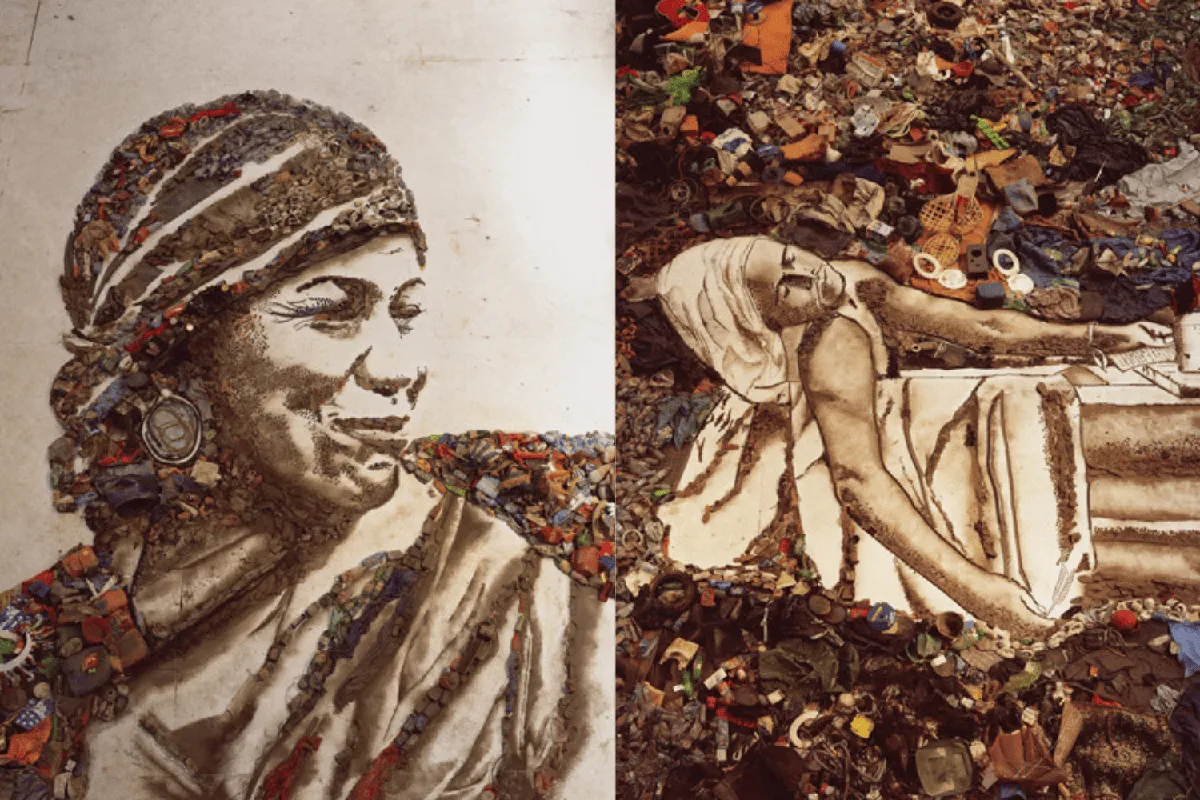
Vik Muniz’s creation with Brazilian rubbish collectors

Celebrity (with some exceptions for women) and cultural power can trump age e.g. Paul McCartney when it comes to negative stereotypes of the old.
Our culture teaches us how to be old. Old Chinese people with less gerontophobia have better memories that old Americans.
Time is not a thief.
Ageing is adding.
The midlife crisis – if indeed such a thing exists – could be said to be a crisis of meaning
Ageing isn't shrinking. It's travelling lighter for the journey ahead.
It's possible to lose everything without losing yourself like the poor man who becomes paralysed but can still make others laugh. The question is: how does he do it? He may say something like: it feels good to make others feel good.
The capacity to love is established in infancy, in response to the care were given. Once a person has established their own identity, they are more capable of creating intimate, reciprocal relationships.
The more we learn about the historical origins of ageism, the easier it is not to take it personally.
Technology has replaced as a store of the memories of the old.
The current economy makes old age a liability. It seems equality is the best way to remove conflict between young and old, as well as Age Apartheid: young and old should mix more.
In the past, mastery of tech was the preserve of the mature. It's not because you are young and when you are young that makes the young today seem like masters of tech. Likewise, beliefs: when rather than being young is how those ideas were absorbed as the zeitgeist.
Instead of age dividing us, passions can unite us e.g. music or political cause.
We judge older family members more favourably than strangers of a similar age.
Inter-age
Inter-generational friendship
- Embracing people of different ages is another way of embracing the ageing process itself.
5. Age and Gender
His and Hers
There is a gendered "double standard about ageing" (Susan Sontag)
Yeah, but men and female have different biological functions for the human species - stronger men provide, protect, preside for weaker females to nurture children - yeah, gonna be told not universal, shrug, shrug, gotta learn more...Our anxieties can be of social and also personal origins
What would an old, disabled but healthy and beautiful body look like?