Happy, Healthy Mind - The School of Life 🚧
https://annas-archive.gl/md5/cd79b7d141d1980344921fa1e9740ded
Introduction- Keeping your mind healthy
Keep mind healthy with:
- sleep
- diet
But the most important thing your mind needs to keep it healthy is good ideas. This means ideas that can make you less worried, that can make life more interesting, that can calm you down when something has gone wrong, and that can stop you feeling too upset about situations you might be facing.
There are lots of problems we’re already good at solving... But there are other problems that are harder to deal with. Often these are mind problems. They are to do with your thoughts and feelings about something or someone that is upsetting you.
Thinking things through calmly helps — a lot. When you think about explanations, often your fears go away, because you realise that the thing you fear couldn’t really happen. You learn a big lesson that many adults still try to keep in their minds: a fear is not a fact.
Ch. 1 Parents
Here’s a useful definition of a parent: a person who will always believe that their child is a baby, and needs as much looking after as a baby did… We’re not saying that this is sensible; it just seems to be the way it is. It’s best to accept it, as you would a rainy day.
If you know you’re the fastest runner at school, someone saying otherwise won’t bother you.
So here’s a new thought: we get upset when people pick up on our own doubts about ourselves. (It’s not just you: grown-ups do this all the time as well.) But if we can feel sure about ourselves, other people’s reactions don’t bother us so much.
Just reiterate the facts
You know you are big. Their fussing now is a little less annoying.
This is a general and big idea to help your mind: the more you know your truth — the truth about you — the less other people’s difficult or wrong ideas will matter, and the less you’ll be bothered if someone else believes something about you that you feel isn’t true. Changing people’s minds is always harder than working on our own minds, so concentrate on getting sure about who you are. It will make the wrong-headed ideas of others matter much less. They will wash over us like rain on a car windscreen.
Work on being sure about what you know is true about yourself
To say you are a failure is a claim. A claim must be justified with warranted reason and evidence, while responding to potential objections. Be rational. Also, know yourself. Know yourself rationally. Speaking truth is a basic universally agreed human duty. Speak the truth about others. Speak the truth about yourself.
Your parents are embarrassing
Your overfamiliarity with your parents makes them more embarrassing than other parents whom you do not know as well, although they do have their own embarrassing faults.
no one is normal
The thing that helps when people try to embarrass you is imagination. Your mind can make pictures of things you haven’t seen. You can imagine what other people’s lives might really be like even when they aren’t telling you. They might seem strong and confident, but you can imagine them getting angry or feeling worried… The next time someone tells you that your family is odd and suggests theirs is not, imagine the many ways in which their situation might be distinctive in its own way.
Parents don’t understand and don’t listen
This is a good general rule: whenever people seem evil, ask yourself a big question. Might this person be scared and worried instead? What might they be scared of or worried about? If you keep that thought in mind, it changes your life.
What parents forget is that your feelings, especially difficult feelings, are going to get better once they’ve been listened to properly.
Feelings get less strong, not more strong, as soon as they have been given an airing.
Make a list of what you will never do to your children. This will make the world better.
When someone says, ‘I am upset…’ rather than change the subject or say ‘No, you’re not,’ you can say, ‘Oh wow, tell me more…’ Or when they say: ‘That makes me so angry’, rather than say, ‘It’s bad to be angry’, say: ‘I can see you must be frustrated…’ (that calms people down very fast! Try it!).
You can try to grow into one of those valuable people who listen a lot.
Ch.2 Screens
But have you ever thought about why screens have such a strong grip of our attention? It’s not because anyone is bad or weak-willed.
The answer is pretty strange: it’s to do with how our brains evolved.
For almost the whole time that humans have existed, for hundreds of thousands of years, there were very few sweet things to eat — only apples, or bananas, or the odd strawberry, and then only for a short time of the year — and all sweet things were good for us. So our brains evolved to get excited by anything sweet, because it was a sign of something extremely important to our diet.
Then, around the middle of the 20th century, it became cheap to make sweet things, and the problems began.
Our brains remained the same, but as the environment changed, some of our tastes grew harmful to us.
Our brains developed a habit of paying special attention to all small, quick movements, to any news from somewhere else and to anything bright and shiny. All these once signalled important things: perhaps a snake (if you lived somewhere hot), or maybe a wasp (if it was summer); or maybe vital news from another tribe or village.
Today, our brains still work in the same way: their deep habits haven’t changed. But now all the content on our screens that activates them is not connected to any real danger or advantage. Our brains keep on getting excited even though the original good reasons for that excitement are not involved.
Addiction is a pattern of behaviour in which you get really drawn to one exciting thing because you are trying to escape from doing or feeling something else that’s somehow difficult (even if it may be worthwhile).
What properly indicates addiction is not what someone is addicted to, because we can get addicted to pretty much anything. It is why: an addict is someone who is using something as a way to avoid looking at something else in their lives that’s making them anxious or daunted.
You could be an addict and people might not even notice.
What makes you an addict isn’t just being on your screen all the time, it is the fact that you are running to a screen because you’re running away from something else.
Maybe you would like to spend less time on the screen. But the way to do this isn’t just to be angry at yourself. You shouldn’t feel ashamed of your strong impulse to go on the screen; that never works. The trick is to “ask yourself what you’re scared of, what you’re worried about doing or what you’re trying to avoid. You need to feel safe about confronting your need to do something else that’s a bit difficult, but probably a lot more valuable: like starting some homework, or having a tricky conversation with a friend, or realising that your beloved grandfather is getting really old and you may miss him a lot when he isn’t there any more.
It’s a lot more charming and effective to say: ‘Maybe I am a bit of a screen addict! Now help me…’ You could try it next time that argument comes around again, as it will.
This can be a problem because we can get unfairly scared or intimidated by words without people. Our brains evolved for a different situation: that of judging people and their words together, using the information from their face, their clothes and their manner to help us make sense of what they were saying.
For thousands of years, you could decide if what someone said mattered or not as you were able to see them, and could bring your knowledge of who they were to your judgement of their words.
We have to remember that we don’t know much about the people who leave nasty messages. If we saw them in real life, we might think them ridiculous and immediately understand that they weren’t worth listening to. We’d recognise their desperate eyes and untrustworthy mouth and we’d dismiss most of what they were saying.
Nowadays, we can’t know all the people who leave the messages that we see online, and that’s why we can get so upset by the nastiness. But we do know something: they’re just another human being. This isn’t God speaking; it’s a person.
Kind people are the only people you should respect
There’s no excuse for bullying. So the moment you see something bad online, ignore it. There is no good reason ever to say nasty things online. If you come across such words, simply disregard them.
We can spare a thought for the horrible people who leave bad stuff online. No one wants to be brutal or cruel. They are that way because they are hurt, damaged, alone and afraid — and because no one has been kind or good to them for a long time.
The good news is that even though online stuff does reflect how the world is, it represents the fringe views of only a tiny percentage. They speak up instead of the majority of moderate, reasonable, kind, not terribly opinionated individuals who stand by in silence. The world is much saner than it appears. The real achievement would be to build an online world every bit as kind, patient and good as most of us are in our real lives at every moment of every day. Until then, ignore the nastiness you see online. It’s the work of people you wouldn’t give any time to if they were forced to emerge from behind their words.
There is another problem with the online world: the misery that is created by believing too much in the pictures people post of their lives — lives that seem very different from, and much nicer than, our own lives.
To get a handle on the problem, we should probably go to a museum and look at some pictures of people in times very remote from our own.
We’re being given a small glimpse into lives that are, in reality, rather different and always much more complicated.
Because we know ourselves from the inside, we are painfully aware of everything that is a bit silly and sad about being us. But when it comes to judging other people, we can only go on what they tell us — and what they tell us is a heavily edited version of the truth. The answer is, as ever, that we have to imagine information that we have not been given. We have to imagine the sadness of the perfect-seeming princess on her holiday, the doubts of the sure-looking windsurfer, the worries of the confident-seeming politician and the pimples of the apparently flawless beauty.
You’re not sad or unimpressive, even if that’s how looking online makes you feel. All of us are unimpressive close up — and that’s fine. It’s what being human means. It’s important not to mistake people’s stories of who they are for what they actually are. Life is difficult for everyone — and the best kind of art (and online pictures) don’t let us forget that. If ever you start posting pictures of your life online, be sure to include one of your mother looking cross on holiday (even if there are palm trees) and one of your bedroom before you have tidied it. That might help other people a lot.
Ch.3 Bullies
The answer is surprising: the bully is frightened. This can be hard to believe, because a bullying person doesn’t look scared or frightened. Sometimes they look as if they aren’t scared of anything. In fact, they are scared of something quite specific: they are mean to others because they are scared that someone will be mean to them.
People are horrible because they're suffering
People behave badly — they get angry or they do and say mean things — when they are afraid of something.“It may sound strange, but sometimes bullies are mean to people that they like. They’re so afraid they won’t be liked back, they start to behave badly, almost as a way of showing how little they care, because caring is painful for them (it reminds them they might not be wanted).
It takes strength to hold on to the idea that something might be precious and yet out of our reach.
So the next time that you find someone being mysteriously mean to you, without any arrogance, keep one thought in mind: maybe they want to be your friend and they’re just scared you won’t want to be friends with them.
That tells us something important: if you know that something isn’t true, even if people gossip about it, you don’t mind so much.
The things we really mind being gossiped about are things that we’re not sure about in ourselves. For example, if we are worried that we’re no good at sports, or that our nose is too big, then if others gossip about these topics, we will feel especially wounded. Gossip gets in the cracks created by our own doubts about ourselves.
If you really know yourself, the next time someone gossips about you, it won’t be pleasant, but it won’t be news to you either. You’ll have gossiped enough about yourself to yourself — and so a few extra layers of gossip won’t matter too much. You will know yourself better than anyone who might have anything mean to say about you. When they say a mean thing, just shrug your shoulders and say, ‘Do you think that’s news to me?!
Ch.4 How Old Am I?
Being happy and at peace with yourself means making friends with the idea that all the old bits of you are still in you somewhere and you can, every now and then, hang out with them.
There’s a terrible fear in all of us about being ‘still a baby’. But maybe we could be a bit braver around this and accept the baby bit of us with greater calm. The baby isn’t going to take you over, you’re never going back to being tiny, so you can afford occasionally to look inside and have a shared moment with the baby-you.
If someone has been told it’s not OK to be little, then they get angry with the little parts of themselves and those of others too. It looks as if they are being mean to other people, but really they are being mean to themselves. If they say: ‘You are stupid, you miss your mummy’, they are speaking to themselves; they are saying ‘I’m frightened of the part of me that misses my mummy’.
Ch.5 School
School gives a misleading idea of success in later life.
You should be careful not to put too much hope in people who won’t allow you to make a mistake. They might be kind people deep down, but that’s not a kind way to behave to anyone.
Ch.6 Friends
Usually, we might think of a friend as someone we spend time with, who likes some of the things we do and who we can chat to. That’s nice, but there are other things a friend might do.
Many people don't have very good friends
If you say you’re feeling worried to a good friend, they don’t say, ‘It doesn’t matter at all, don’t be “silly’; instead they will say, ‘Tell me what you are worried about’. When you are telling them something, they’ll listen and say, ‘That’s interesting, tell me more’. If you’ve made a mistake they will admit they’ve made mistakes as well. They’ll tell you their own mistakes, saying, ‘I was stupid, I was a bit scared, I messed up.’ They let you see the vulnerable parts of them and they quietly invite you to share your troubles with them. A good friend might upset you sometimes, but if they do they are genuinely sorry and they tell you they are.
In the meantime, you might feel lonely sometimes. Lots of people are lonely, even though they don’t seem it and have lots of people they hang out with day to day. There’s nothing ‘weird’ or ‘sad’ about being lonely. It’s often a sign that you are a complicated and interesting person. Some of the people who made this book also feel lonely, though you might not think so if you only saw them from the outside.
Try to catch the thoughts that go through your head. They will tell you if you’re being a friend to yourself or if you are being unfriendly to yourself.
“To get a picture of how friendly (or not) you are to yourself, find a pen and some paper and try answering the following questions. After you have written down your answers, take a close look at what you would say to yourself and ask, ‘Am I being a good friend to myself?’ If you see that quite often you are not a very good friend to yourself, that’s actually normal. Most of us aren’t as nice to ourselves as we are to other people.
Once you notice you’re not being nice to yourself, you can deliberately change the way you speak inside your own head. You already know how to: you can imagine what a good friend would say when things go wrong.
So when you are feeling worried or upset, or if you think you have done something stupid, you can ask yourself, ‘What would a nice person say to me now?’
If you try to do this regularly, it will start to become a habit. You’ll find you automatically say friendly things to yourself, and life will get a lot sweeter.
On envy
Instead of trying not to feel envy, the idea is to ask envy some interesting questions.
Envy is like this. It tells you that there’s something about this other person that’s important to you. But it doesn’t tell you exactly what. You might think it is obvious, but perhaps it isn’t. Perhaps you envy the ski holiday. But what is it that you would really like? Maybe it’s not so much skiing; it’s the idea of doing something interesting with your dad. Maybe, once you start to think about it, you don’t so much want to go skiing as hang out more with your father, which you haven’t been able to do since he moved out.
What you envy sends you a mixed-up but interesting signal about who you want to be. But because it’s mixed up it might give you the wrong idea.
What’s interesting is that the thing you really want might be more easily available to you than the thing you envy. Maybe you just can’t go skiing, but you could play a game with your dad. Maybe your mum won’t get a fancy car, but you could try to cheer her up by curling up under a blanket with her on the sofa and watching TV.
On Shyness
Just as with the lamb, your brain might be making a mistake. You think this person is a threat, but actually they could be very nice. The alarm bells in your head are not always good at telling the difference between a nice person and a not so nice one.
A shy person’s brain is like an over-sensitive fire alarm. Around other people, there can occasionally be danger and so we want an alarm that tells us about that. But we can understand the big idea that the alarm might be too sensitive and goes off too quickly, even when there is no danger at all.
Something that helps with shyness is to imagine the rest of someone’s life. They might not look like you but there could be lots of things about them that mean they will understand you and be friendly towards you.
Learn to ignore it, like your mother does with the fire alarm when the toaster sets it off by accident.
To help with shyness there are some questions you can ask yourself. The first one is: who makes me feel shy?
It sounds easy, but maybe it’s not. It is a strangely big step sometimes just to tell yourself something. The second question is: what’s my worry about them?
What else could I imagine about them that would help?
There’s a strangely helpful idea to keep in mind: we are all very similar underneath our differences.
On love
Loving someone, in the sense of being very kind to them, can mean:
- You are interested in their problems and want to understand them properly
- You do something they like, because they want to, even if it's not your first choice
- Their happiness is as important to you as your own
- You keep on being friendly to them, even if they aren't very nice for a while
- You always want what is best for them
- You tell them when they are making a mistake, even if they're annoyed, because you want to help them
So although other people might giggle about who’s in love with who, it isn’t because they know what love is, but because they’ve forgotten.
How to make a true friend
Tell them something unexpected about yourself
By something unexpected, we mean something that only a few people know about you (or perhaps none at all) — something you think makes you a little bit unusual. For example, that you dislike a certain teacher; or that you quite enjoy maths homework; or that you’re jealous of a girl in class.
You might start with a fact about yourself (I hate changing for PE; I think the school toilets are scary; football is boring...) and choose someone you always get on well with, who is kind, to tell it to. If they respond nicely, you can tell them more. By giving a friend this information about you, what you’re really saying is:
I trust you with a precious part of myself
You are giving them a special bit of knowledge about yourself that you wouldn’t give to many other people, because you believe that they’re the kind of person who you can confide in.
And because your new friend will feel that you’ve given them this lovely present — an unexpected fact about you — they are likely to feel safe enough about doing the same back. They may tell you something unusual about themselves. They may tell you that they’re scared of dogs, or that they’re allergic to fish, or that they can turn their eyelids inside out. These unusual facts act like a kind of glue — they are what makes friendship stick. It’s hard to be a really great friend of someone who doesn’t know any of your secret, weird or particular parts. And you can make sure to take care of their secrets just like they will take care of yours.
We might think that, in order to make friends, we always need to be cool, mysterious and tough. That is true in some cases, but if we are talking about real friendship, then the only way to make a proper friend is to take a risk with a unique part of you. It should be worth it in the end.
Ch.7 Your Body
Your brain is where your thoughts and feelings happen — but, crucially, your brain is also part of your body. This means that what happens in your body will — and this can sound odd — impact on your ideas and views on things.
The baby’s mood changes because of what’s happening in the rest of her body.
This continues right across the whole of our lives. Lots of things about our bodies can influence our moods, like not getting enough sunshine or enough sleep at night, not drinking enough water or the right kind of food, or even just spending a long time sitting down. Perhaps your body might feel too hot or too cold, and that is changing your mood.
But there’s often a tricky thing here: our brains don’t tell us when and why they are getting in a bad mood. Our brains don’t send a signal saying: ‘Watch out, I’m getting gloomy because I’m getting tired. I’m probably going to start getting annoyed with Mum in about two minutes because I’m low on vitamins’. Or ‘Hang on, I’m dehydrated, so I’m about to feel I can’t do my work and that school is unfair and horrible’.
We think that other people will judge us on our looks.
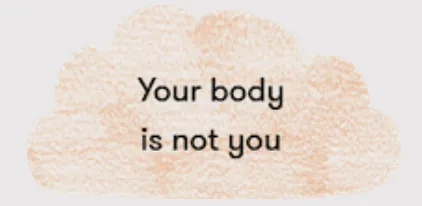
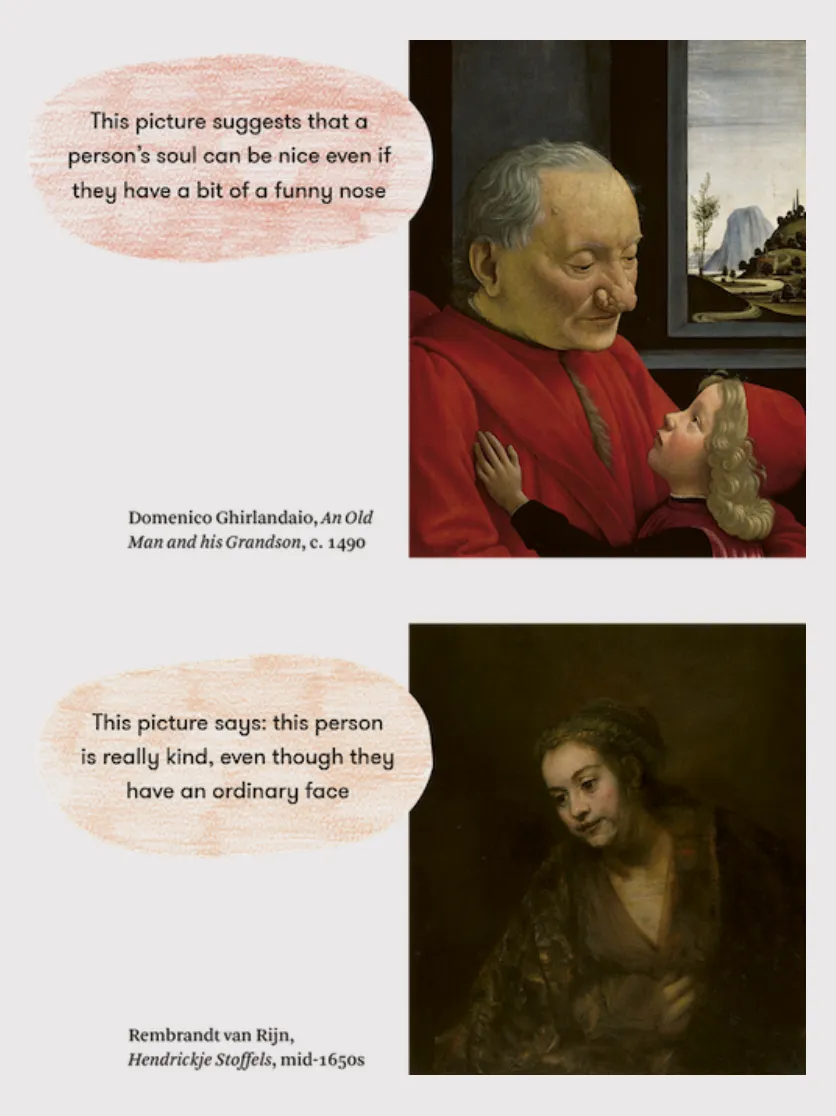
You are not your body. You are your soul.
A good way of putting it might be to say: you have become more you. It’s not that you have stopped being the person you were four years ago. Rather, you have added to that person and you have extended and developed who you are (like aging).
Your soul will carry on, whatever your body is doing. Or, to describe it another way: the car you’re travelling in might change, but you will still be the passenger.
Today, we do not have such strict rules, but we do have something not entirely different: expectations based around averages.
Some girls really hate cars, some love them, and most are somewhere in between. If we asked boys, we would get the same spread, but a few more would be on the ‘pretty interested’ side.
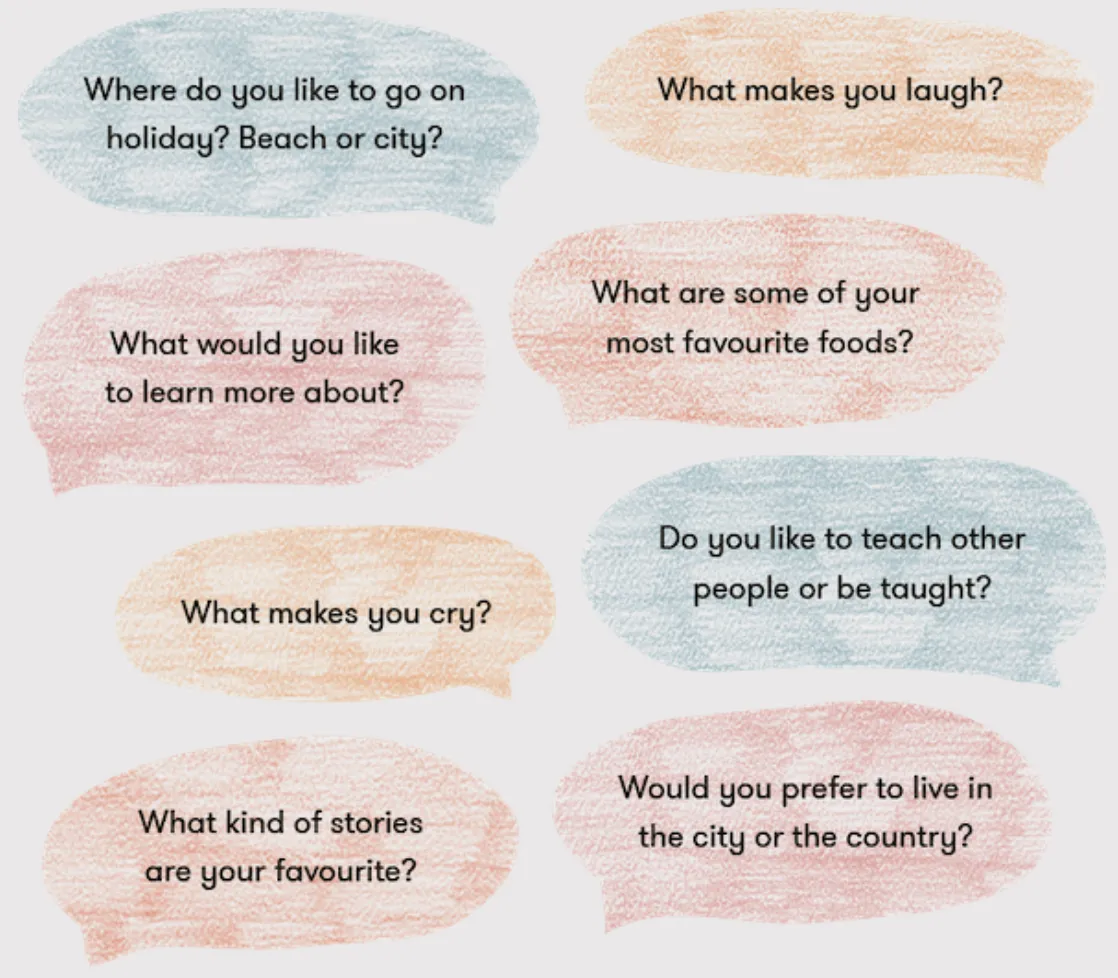
The answers you give to all of these questions are important for saying who you are. But none of them depend on gender. If you just knew that someone was a girl or a boy you wouldn’t know much about them at all. That makes life a lot more interesting and free!
But you can see something quite amazing: in spite of the average, some girls like cars a lot and some boys don’t like them at all.
Ch.8 Feeling Misunderstood
The real problem is that it’s difficult to get an idea that’s in your head to make its way safely and reliably into the head of another person.
This kind of difficulty happens a lot. You know what you are thinking and feeling, but it is hard to say it in words. So the other person gets a slightly (or very) wrong idea of what you have in mind. It is no one’s fault, it just happens!
But we can learn to get better at it. There is a special name for this skill: teaching.
There’s something they know and they want you to know it too.
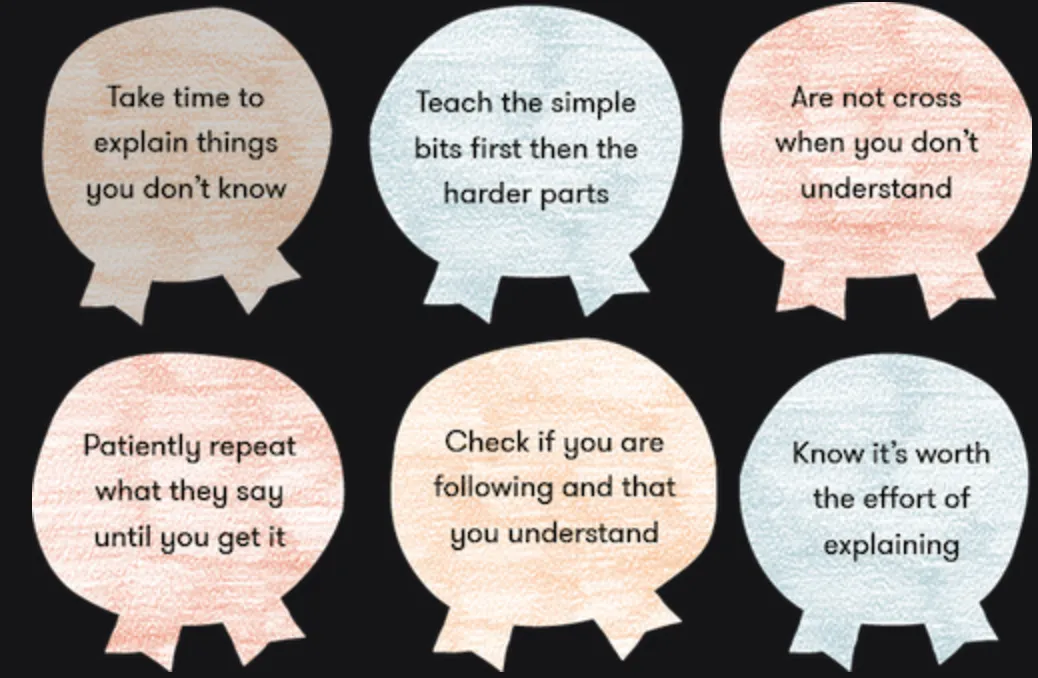
Instead of:
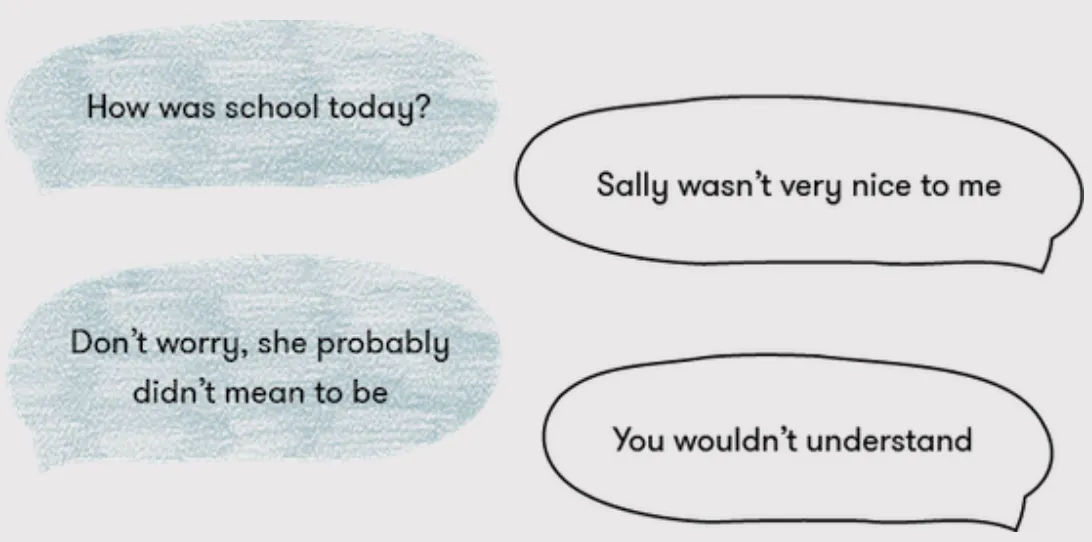
do:
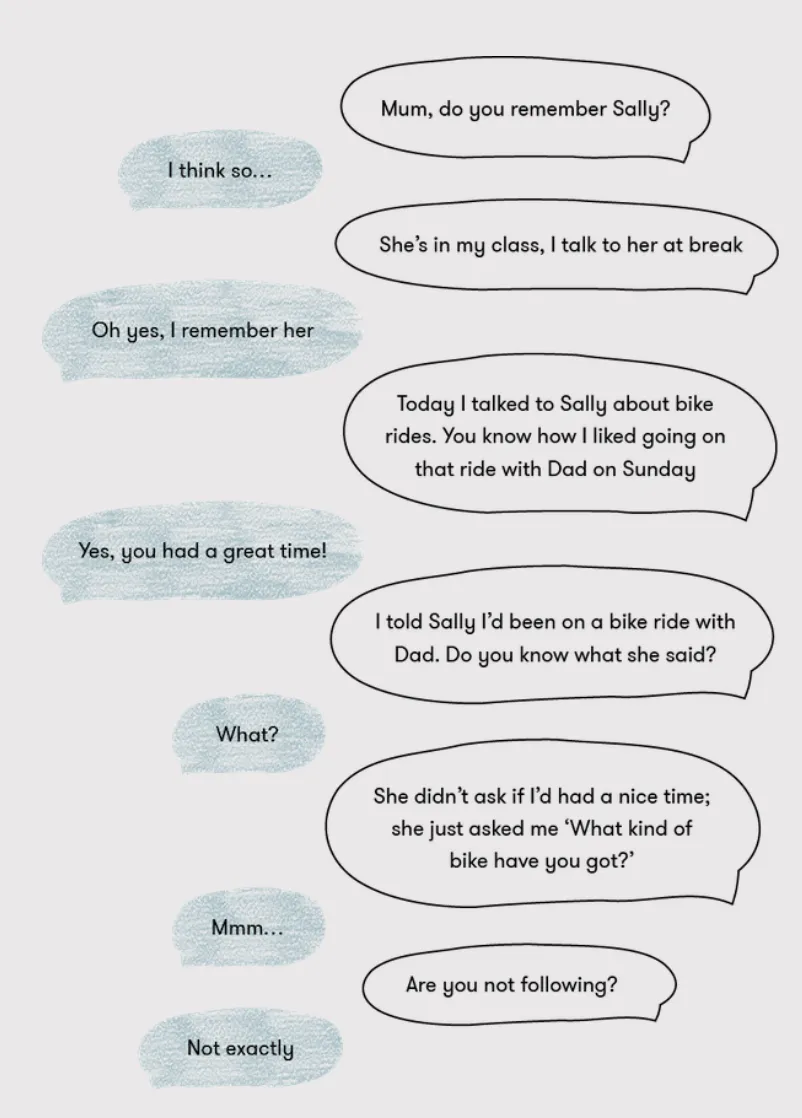
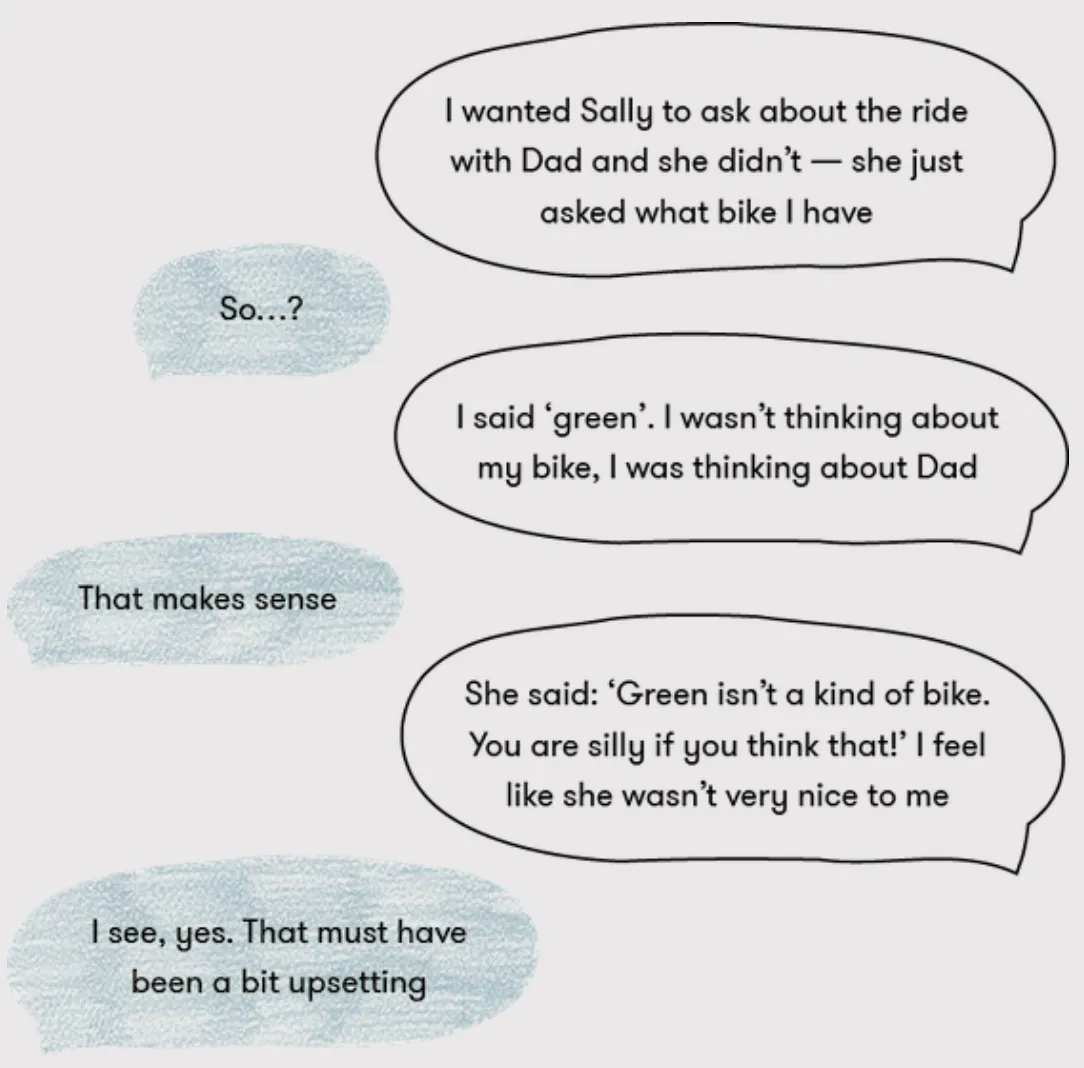
If you feel that someone doesn’t understand you, it’s maybe not that they can’t or don’t want to understand. There’s another possibility: it’s quite tricky explaining what the matter is and as yet you do not have enough skills to get them to see what’s going on in your head.
Ch.9 Anger
Anger isn’t some kind of inevitable bodily reaction. It’s the result of certain sorts of ideas — and if we could only change some of our ideas, we could also be a lot less angry.
To put it another way: it’s easier to make a sad person feel better than an angry one.
One of the things to notice is that the difference between the Angry things and the Sad things has nothing to do with seriousness. You could be sad that your grandmother has died, but angry that you can’t find your pencil.
Both anger and sadness start off with frustration, with a wish that has not been fulfilled. But the frustration will make us sad when it is expected. It might make us furious when it is a surprise. You could put it like this:
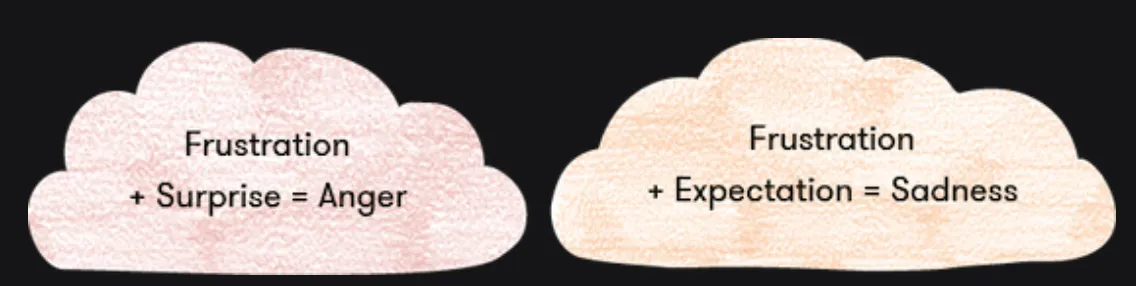
We stay calm about difficult things that we expect might happen, but we can get angry when we’re taken by surprise. If we want to lead a better life, it can be wise to expect a bit more and be surprised a bit less.
Another way to put it is that people who get angry often are, without really knowing it, operating with high expectations. Let’s go further: they are strangely optimistic. Angry people are optimistic.
One major solution to reduce our anger is therefore this: we must more regularly expect that bad things will happen to us. We must try to move as many of the items on the chart we just did from Column A (What makes me angry) to Column B (What makes me sad). We need to learn the art of being a bit gloomy about how things can turn out.
These aren’t nice things, but we should know that they are real possibilities, and aim not to be shocked by them.
The word ‘pessimism’ means expecting that, a lot of the time, unfortunate things will happen. Pessimism is frequently seen as the enemy of good things.
But, within reason, maybe it can be useful to warn yourself that some disappointments might come your way.
You could get a bit sad for a while, and then cheer yourself up by doing something silly and fun.
It’s much better to share unpleasant thoughts than scream them at the top of your lungs or take them out on other people or objects.
Ch.10 Anxiety
Our bodies have developed (during the process of evolution) to feel anxious quite a lot in order to protect us.
But today, many of the threats that we face look different.
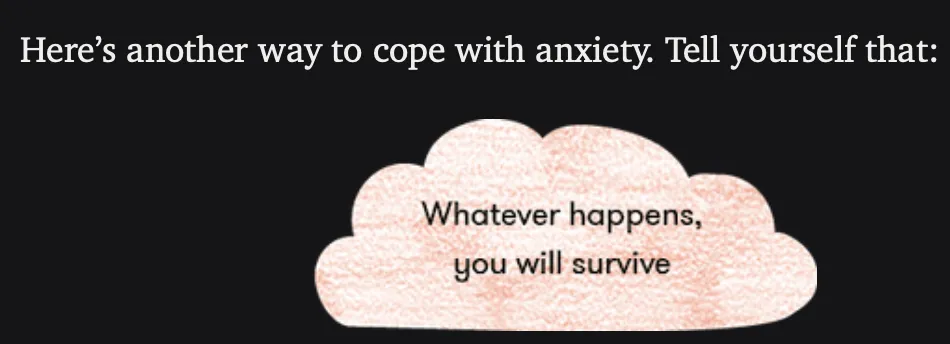
So yes, maybe the exam won’t go brilliantly. But you can survive.
Trying to remind ourselves that we can survive belongs to a way of thinking called resilience. Resilience means being able to bounce back from things that go wrong.
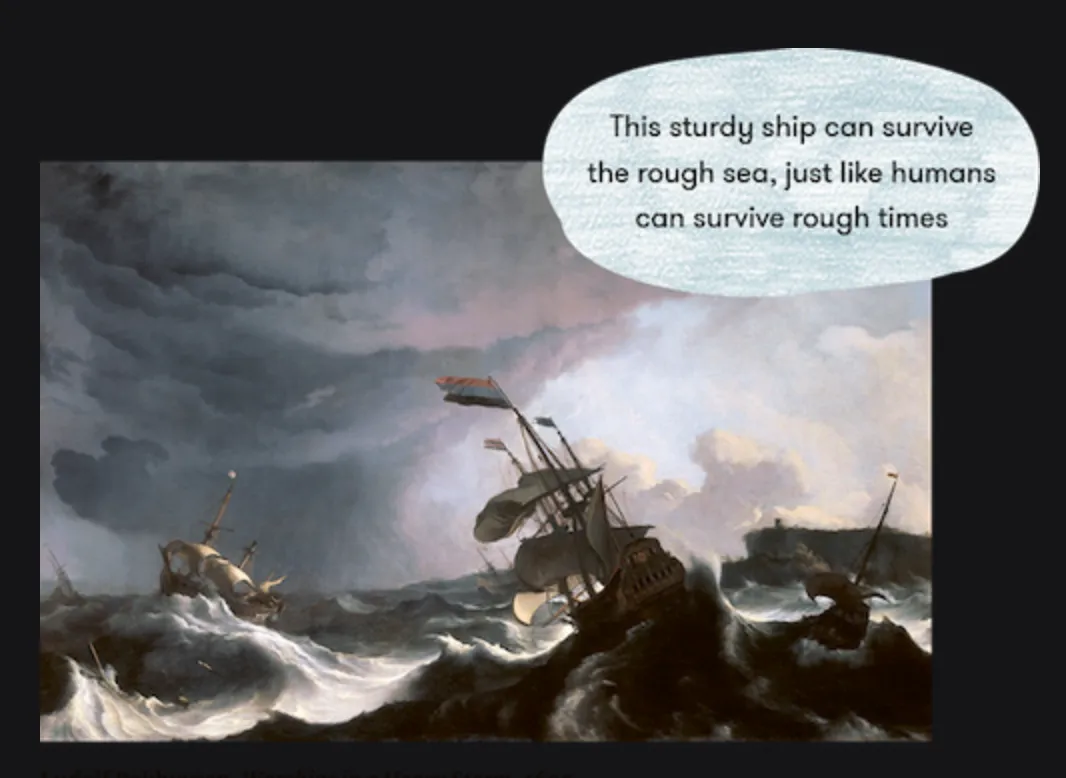
Resilient people know that a human being can take a lot of knocks, and still carry on. It may not feel like it. It may seem that you’ll break apart and shatter like glass, but you won’t. We’re all pretty tough creatures and have been throughout our history.
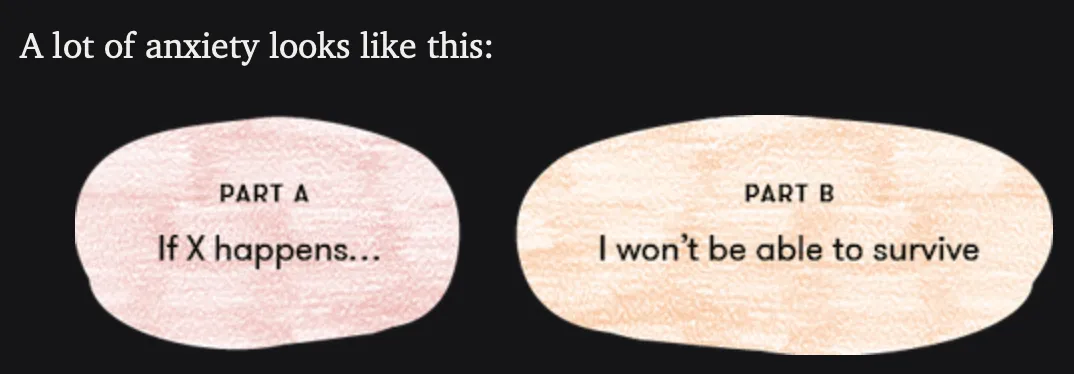
Notice that there are two parts to that statement: A and B. Most of the time, when people are trying to calm us down, they focus on addressing Part A. They tell us that X, what we fear will happen, won’t happen. This is meant kindly and it can sometimes work, but it doesn’t properly help and, in the long run, it actually makes us more anxious.
So it is better to focus on Part B, the feeling that you won’t survive, and knock that on the head.
It might be pretty tough, and ‘survival’ might include you shedding a few tears, but you will get through it. Maybe there’s some things you can do now that will help. Increasing your sense of resilience is vital to making yourself ready for life.
So an idea to stop ourselves from being tormented is to stare our troubles in the face. We could ask:
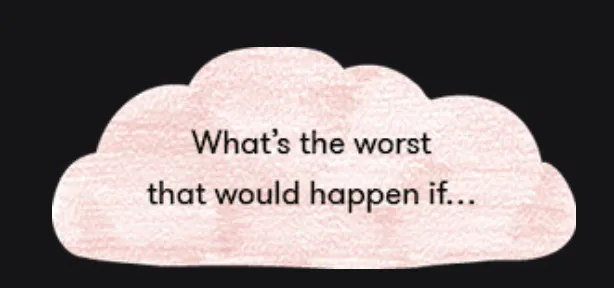
Often, we find that the worst would not be ideal, but OK.
Ch.11 Confidence
Instead of saying, ‘You’re amazing; you’ll be amazing’, (because maybe you won’t this time!), we say: ‘You’re a bit of an idiot, but don’t worry, everyone else is too. We’re all idiots, so don’t worry about messing up!
At many moments of underconfidence, we’re faced with two contrasting emotions: a wish and a fear. The wish is to seem serious to others and most importantly to oneself, by which we mean cool, in control and grown-up. And the fear is of seeming like an idiot to oneself and others, by which we mean stupid, babyish and a loser. You could put it like this:
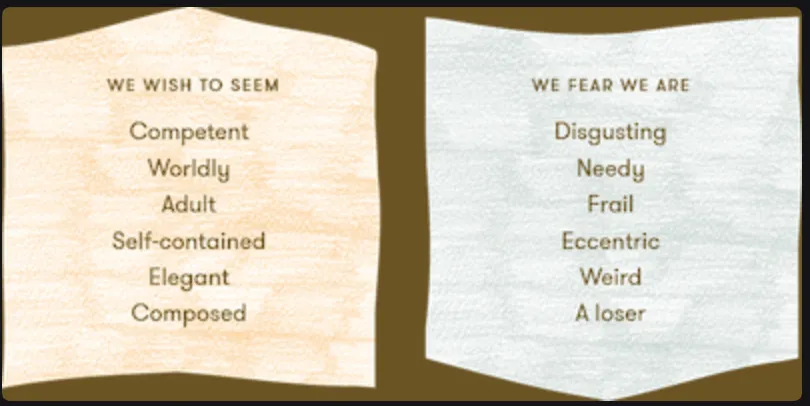
Rather than saying that we are all amazing and great, we should make ourselves at peace with the thought that we are all idiots: you, everyone at school, everyone out in the street, everyone in the government, in fact, everyone everywhere pretty much at every moment.
It isn’t possible to lead a good life without regularly making a complete idiot of ourselves.
What we need to do is to befriend our Inner Idiot. We all have one. You know it’s there. Mostly you’re desperate to stay away from the Inner Idiot. But please don’t. Make friends with it. Get to know it in broad daylight. And be assured that everyone has an Inner Idiot too.
That’s what it means to be human.
We grow free to give things a go by accepting that being an idiot is normal. And every so often, things will go right.
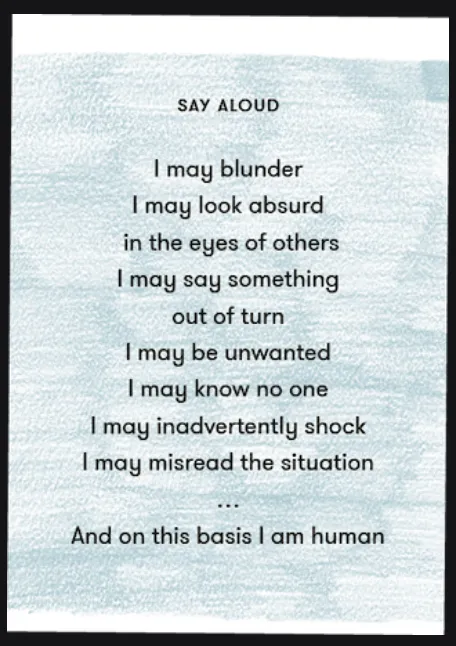
Impostor syndrome
This a belief that some people are OK doing stuff, but some people (us) are impostors; that is, people who are pretending.
Without knowing it, we’re dividing the world up into two camps: those of the Impostors and those of the OK or ‘legitimate’ (that means ‘allowed’).
The problem with Impostor Syndrome is that we’re too unfair to ourselves and too generous to other people. We assume that some other people are without errors and faults, and we use our errors and faults as arguments against ourselves.
Everyone is putting on a ‘mask of success’.
We’re all idiots and we’re all a bit scared. Now go for it!
Ch.12 Patience
This exercise is called The Weakness of Strength. It says that every strength that a person has will also bring with it a certain weakness — and every weakness will come with a particular strength.
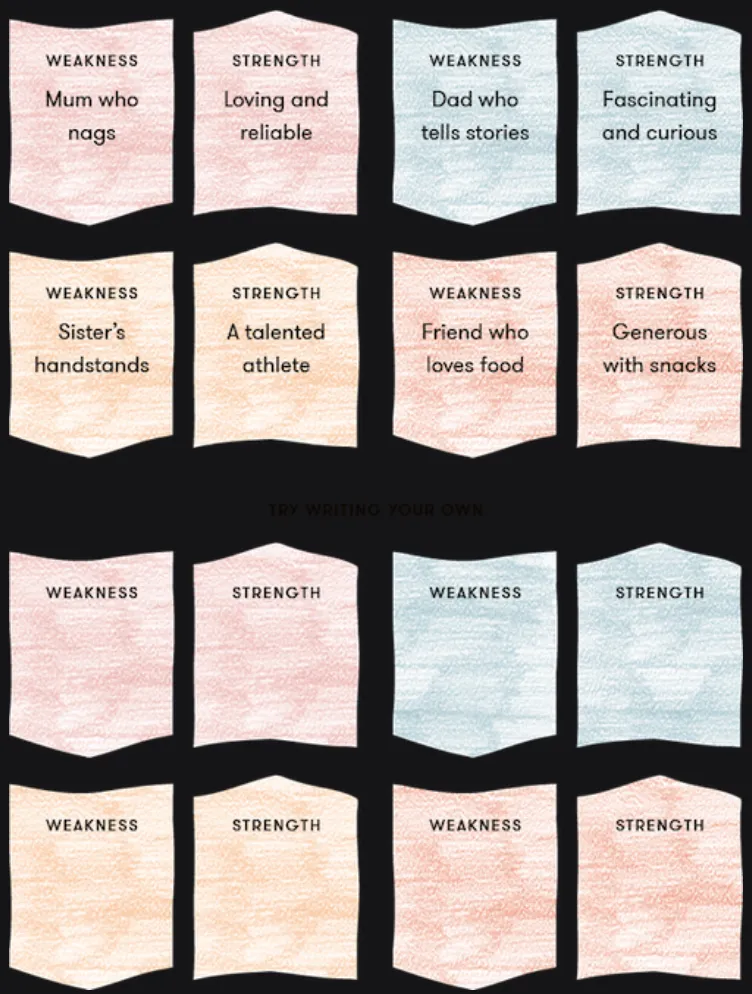
We’re all made up of a huge number of strengths and weaknesses — and the two are linked.
Ch.13 Nature
Nature (by which we mean animals, as well as wide open spaces) is good for your mind.
The reason goes a bit like this: nature doesn’t care about you.
At last, you’re in the company of a living being who just gets on and does its own thing — and it invites you to get on and do your thing without thinking too much or second guessing everything like we all often do.
Pretty much any animal that won’t eat you when it’s hungry, you should hang out with them as often as you can — and leave your phone behind.
It’s nice to be made to feel small in nature.
Normally, feeling small is a bad experience (when an enemy at school does it to you, for example), but when nature makes us feel small, it can feel cosy and calming. Nothing matters quite so much any more. We realise that we’re all tiny, that there’s a big universe that knows nothing about us, and that our problems aren’t as vast as we sometimes think they are.
This sensation can be very comforting. Nature doesn’t just make us look small, it makes our problems, our enemies and our heroes look small too. That helps.
Nature drags us away from the minor details that normally occupy our attention and makes us concentrate on what truly matters.
Ch.14 The Adult World
News
The news doesn’t tell you about all the normal and quite OK (or really rather good) things that are happening everywhere. It just tells you about the things that went wrong.
Jobs
Work can be enjoyable: we like feeling that we are being useful to other people. So the most interesting and enjoyable jobs are not necessarily the ones where you get paid most but where you have a clear and strong sense that you are helping other people.
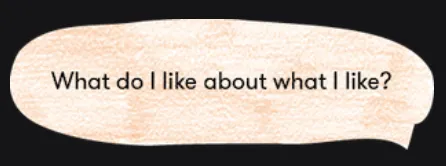
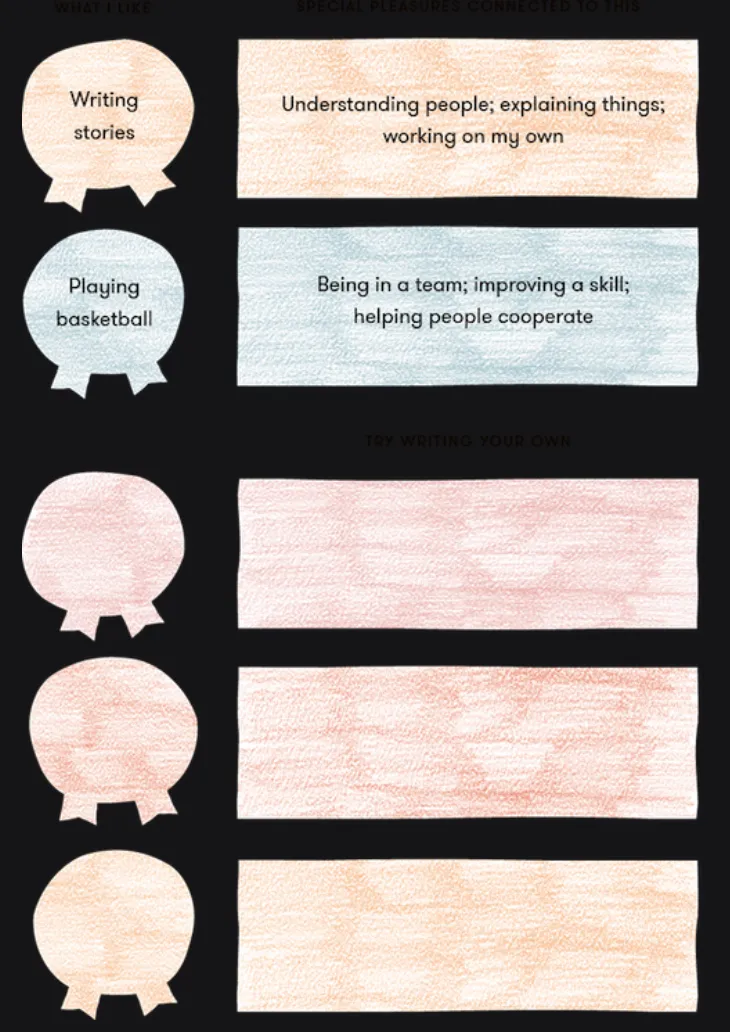
So if you like writing, that’s an interesting clue, but it’s maybe not a direct guide to what to do for work. You can ask an interesting next question: what do I like about writing? Maybe you like making sense of other people. It could be that you really enjoy trying to explain things.
Take a look at the table on the next page. Find a pen and some paper and try drawing one that looks similar.
The ‘pleasures’ don’t tell you exactly what to do. But they can give you ideas. They suggest the kinds of things you might be spending time doing in a job that you find interesting and satisfying. The next time an adult asks you what you want to do when you grow up, tell them you are still thinking about it.
Money
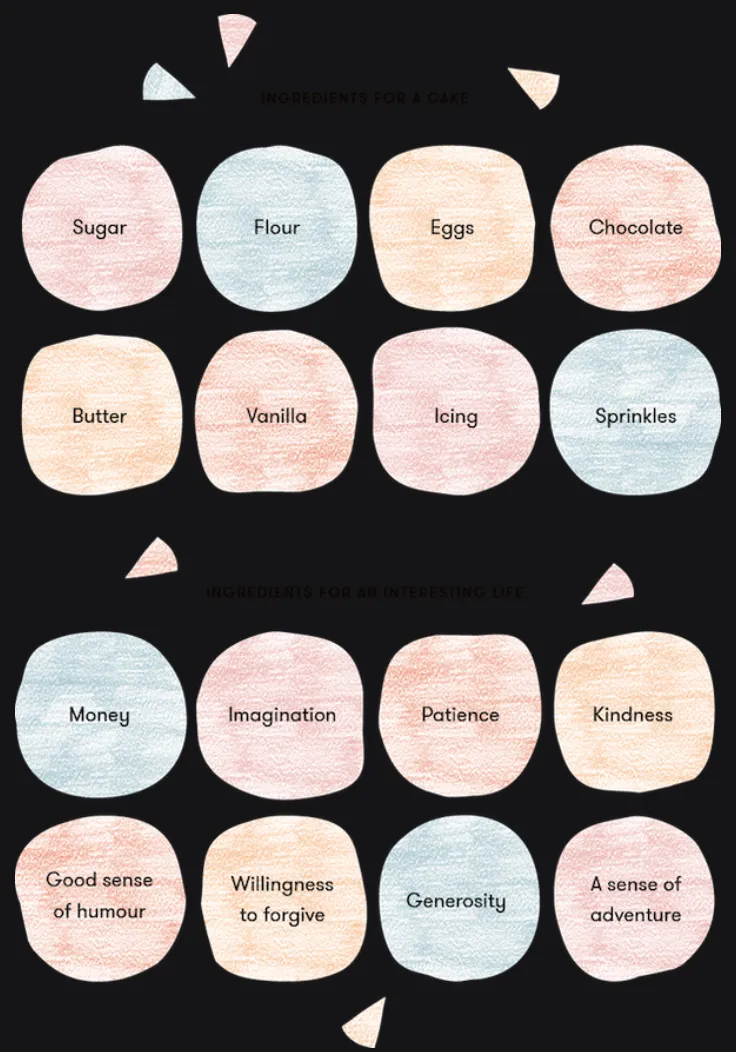
Here’s a way of thinking about money: it’s like an ingredient in cooking. Let’s imagine money is like sugar (you can have a lot of it or not very much) and you want to bake a cake.
If you have lots of sugar you might think: that’s great, I can make a huge cake. But that’s not really true. It depends on what other things you have. A big pile of sugar on its own won’t help if you don’t have any flour or eggs.
Even if you have very little sugar you can make something interesting — if you have other good ingredients. You could make some pancakes or a pizza (if you have some cheese).
In the same way, as an ingredient, money isn’t much good on its own. The other ingredients for a good life aren’t like money. They’re to do with your thoughts and feelings and your personality.
Ch.15 Separation
Becoming more independent is a sign that things have gone well. You can look after yourself because you’ve been looked after well. It took a lot of work and a lot of love.
‘Internalisation’ happens when someone else’s intelligent and helpful thoughts become your intelligent and helpful thoughts.
You are internalising your parent. You don’t need them to actually be there with you to tell you because you have their voice in your head. Their voice, speaking in your head, keeps you safe, even though they are not physically with you.
Eventually, you will have internalised a parent enough so you don’t need them to be there to help you. That’s not because you do not care about them. It’s for the opposite reason: you have internalised your parents’ love and care, and you carry that about with you in your mind.
Even if you move to a different country when you are older, your parents will still be with you all the time in this special and important sense. You don’t need to be physically together for your minds to be close. All the best things about them will be with you all the time, wherever you go.